
Case 780B Construction King Backhoe Loader: Specs, Parts & Common Issues
Produced 1981 - 1985, the 780B is the direct successor to the 780CK. Same turbocharged Case A336BDT four-cylinder diesel - 336 ci / 5.5 L, 120 HP gross / 111 net - with refined cooling capacity and chassis updates. Final 4-cylinder generation of the 780 line before the 780C stepped up to the larger 6-cylinder 6T-590.
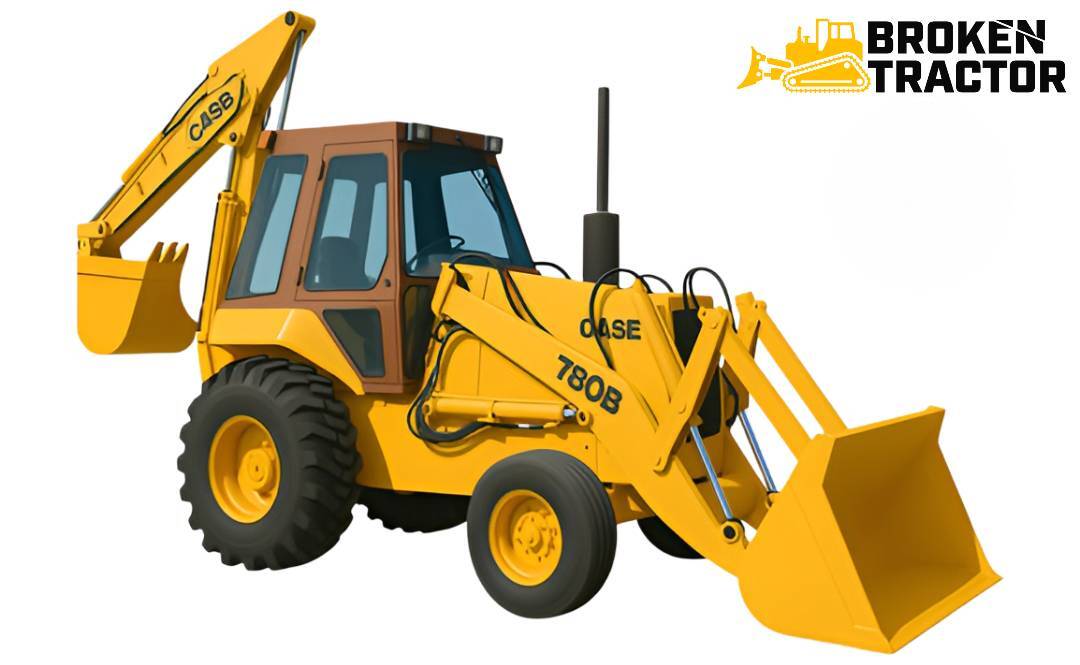
The Case 780B is the direct successor to the 780CK / 780 launch machine. It came to market in 1981, replacing the 780CK after a decade-long production run, and ran through 1985. The 780B carries forward the turbocharged Case A336BDT four-cylinder diesel essentially unchanged from the 780CK - same 336 cubic inch / 5.5 L displacement, same 4.625 × 5.00 inch bore-stroke geometry, same 120 HP gross / 111 HP net output rating, and the same 24V electrical system.
What changed at the 780B is everything around the engine: refined cooling capacity (the coolant system grew from 26 to 36 quarts), chassis updates, cab refinements, and updated operator-station hardware. The 780B was produced concurrently with the 780C (also introduced in 1981 with the larger 6-cylinder engine), giving 1981-onward buyers a 4-cylinder or 6-cylinder choice in the 780 line. The 780B continued the 4-cylinder option through 1985 before being dropped as Case standardized on the 6T-590 for the larger machines.
At-a-glance specifications
Case 780B - factory specifications
- Production years
- 1981 - 1985
- Predecessor
- Case 780CK / 780 (1971 - 1981)
- Successor / sibling
- Case 780C (1981 - 1988, larger 6-cyl engine)
- Engine
- Case A336BDT turbocharged 4-cylinder diesel
- Displacement
- 336 cu in (5.5 L)
- Bore × stroke
- 4.625 in × 5.00 in (117 × 127 mm)
- Power (net)
- 111 HP (82.8 kW) @ 2,200 rpm
- Power (gross)
- 120 HP (89.5 kW)
- Peak torque
- 333 lb-ft (451 Nm) @ 1,500 rpm
- Compression ratio
- 15.8:1
- Engine oil capacity
- 12 qts (11.4 L)
- Coolant capacity
- 36 qts (34.1 L)
- Transmission
- Power shuttle, 4F / 4R, torque converter
- Drive
- 2WD
- Final drives
- Outboard planetary
- Electrical
- 24V system, dual battery
- Brakes
- Hydraulically actuated dry-disc
- Hydraulic system
- Open-center, gear pump
- Operating weight
- ~18,000 - 19,000 lb (varies with configuration)
- Cab
- Standard or optional enclosed
How the 780B differs from the 780CK
The 780B is a platform refinement of the 780CK, not a clean-sheet redesign. The engine, transmission, axles, brakes, and hydraulic architecture all carry forward essentially unchanged. The notable updates:
- Cooling system capacity increased - coolant capacity grew from 26 quarts on the 780CK to 36 quarts on the 780B. A bigger radiator and surge tank handle more heat under prolonged heavy work, addressing one of the limitations of the original 780CK in hot-climate operation.
- Chassis refinements - minor structural updates to the loader frame and backhoe iron for improved durability.
- Cab and operator station updates - sealed cab refinements, updated control linkages, and improved gauge cluster.
- Electrical system updates - same 24V architecture, but with improved harness routing and connector hardware compared to the 780CK.
The result is a 780CK with more long-term durability and less heat-management strain - a true Series B refinement rather than a major platform change. That's why some 780B parts cross to the 780CK in our catalog, while others are 780B-specific due to the cooling system and cab updates.
A336BDT engine carryover
The Case A336BDT is the same turbocharged four-cylinder diesel that powered the 780CK. Designation breakdown: A336 references the 336 cubic inch (5.5 L) displacement; B is the engine series; D is diesel; T is turbocharged. The wastegated turbo and direct-injection combustion are the same architecture as the 780CK, with calibration updates over the production run.
Compression ratio dropped slightly from 16.5:1 on the 780CK to 15.8:1 on the 780B - a minor change that helps reduce peak cylinder pressure and improves long-term head gasket durability. Peak torque grew modestly from 329 to 333 lb-ft, both rated at 1,500 rpm.
Power shuttle and outboard planetary drives
Same Case Power Shuttle transmission with torque converter, four forward and four reverse speeds, and outboard-planetary final drives as the 780CK. Service items follow the same pattern: clutch packs wear, the shuttle valve gets sticky, and the torque converter charge pump weakens with age.
Hydraulic system
Open-center hydraulics with a gear pump, working pressure in the 2,000-2,500 psi range. The G103073 loader lift cylinder in our catalog confirms cross-fit across the 680L, 780B, 780C, and 780D - a useful long-fitment item for backhoe loaders running similar loader frames.
Parts we carry
The 780B is over 40 years old. Parts availability is limited but supported by cross-fit with the 680H, 780C, 780D, and other Case industrial machines of the era. The items below are available at Broken Tractor with verified 780B fitment.
| Part # | Part | Notes |
|---|---|---|
| A176539 (R46156) | 24V starter motor | The 24V starter that runs across the 680H, 780B, 850C, and W14 wheel loader family. Confirms the four-machine 24V electrical commonality. The single most-replaced item on machines that sat for extended periods between operations. |
| G103073 | Loader lift cylinder | Loader lift cylinder with wide cross-fit: 680L, 780B, 780C, and 780D. Standard-bore cylinder that cycles every loader operation - high duty cycle, predictable seal wear. |
| H0830501 | Secondary engine air filter | Inner safety air filter element. Confirmed fit 780B and 880C. Critical service item - the A336BDT's turbo will ingest dust quickly if the primary filter is damaged, so the secondary filter is the engine's last line of defense. |
For 780B service literature, the Case 780B factory service manual is the authoritative reference for engine, drivetrain, hydraulic, and electrical diagnosis. Our parts team can help locate a reproduction copy.
Common issues and what to expect
A336BDT engine wear
The A336BDT is durable but well past expected service life on any original-engine 780B still in operation. Common items: head gasket failure (40-plus-year-old gaskets are typically failed or near-failed), turbocharger bearing wear, valve seat recession, and injection pump wear. Plan on a full engine rebuild as a baseline restoration step on any unrestored 780B.
Cooling system corrosion
The larger cooling system on the 780B is an advantage in service, but the original radiator and surge tank are now 40 years old. Internal corrosion in the radiator cores is the most common cause of overheating complaints. Replace the radiator at the first sign of cooling-system trouble; don't try to patch a corroded core.
Power shuttle clutch wear
Same pattern as the 780CK and the 680E/G/H. Clutch packs wear, the shuttle valve gets sticky, and the torque converter charge pump weakens. Drop the rear casting and inspect.
24V electrical system
40-plus-year-old 24V cables and connectors are typically corroded. The R46156 / A176539 24V starter is the verified replacement when the original starter fails. Inspect battery cables, ground connections, and the alternator output at every service.
Hydraulic cylinder seal failure
Every cylinder on a 780B has seals that are 40-plus years old. Plan on rebuilding every cylinder as part of any restoration. The G103073 lift cylinder is a common starting point.
Working on a Case 780B?
The 780B's parts ecosystem cross-references with the 680H, 780CK, 780C, 780D, 850C dozer, and W14 wheel loader. Our specialists can verify fitment by serial number and engine ID before you order.
Mon - Fri, 7:00 AM - 5:00 PM CT
Contact Broken TractorWhere it sits in the 780 family
The 780B is the second generation of the 780 line - a Series B refinement of the original 780CK platform. It ran concurrently with the 780C from 1981 onward, with the 780B continuing as the 4-cylinder option and the 780C representing the 6-cylinder upgrade. After 1985 the 780B was discontinued and Case consolidated the 780 line around the 6T-590-powered 780C, which continued through 1988 before the 780D closed out the line in 1993.