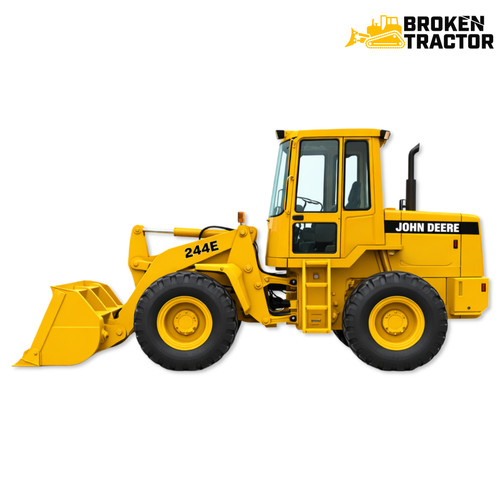
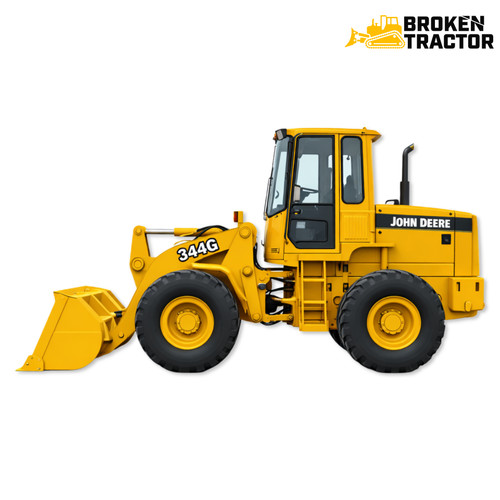
The John Deere 344G Wheel Loader is a powerful mid-size compact loader designed for construction, municipal work, landscaping, and snow removal. Part of the G-Series lineup, the 344G delivers increased lift capacity, advanced hydraulics, and enhanced operator comfort while maintaining excellent maneuverability for confined job sites.
Built for durability and easy service access, the 344G is a popular choice for operators who demand performance without sacrificing reliability.
Engine & Power
-
Engine: John Deere PowerTech™ EWL diesel
-
Displacement: 4.5L (276 cu in)
-
Net Power: ~103 hp
-
Emissions: EPA Tier 4 Final (DOC/DPF system)
-
Fuel System: High-pressure common rail
Transmission
Hydraulic System
-
System Type: Open-center with pressure-compensated flow
-
Operating Pressure: ~3,600 psi
-
Pump Type: Variable displacement piston pump
-
Auxiliary Hydraulics: Available for attachments
Common wear items include:
Dimensions & Operating Weight
Performance Highlights
-
High lift capacity for pallet and material handling
-
Premium cab with improved visibility and climate control
-
Compatible with buckets, forks, grapples, and snow pushers
-
Strong breakout force for loading trucks and stockpiling
Common Maintenance Needs
-
Engine oil & filter changes
-
Fuel, air, and hydraulic filter replacement
-
DPF system monitoring (Tier 4 models)
-
Axle oil and brake inspection
Find essential service parts such as filter kits and brake components to minimize downtime.
Common Issues & Quick-Fix Solutions
1. Hydraulic Leaks at Lift or Tilt Cylinders
✔ Replace worn seals using quality hydraulic seal kits.
2. DPF Regeneration Issues
✔ Ensure proper operating temperature and inspect sensors if frequent regen warnings occur.
3. Hydrostatic Drive Performance Drop
✔ Check hydrostatic fluid levels and replace clogged filters promptly.
4. Articulation Joint Wear
✔ Replace worn loader pins and bushings before frame damage occurs.
Pro Tips
-
Grease articulation and loader arm pivot points daily in heavy-use applications.
-
Monitor DPF regeneration cycles to avoid unnecessary downtime.
-
Address minor hydraulic seepage early to protect the piston pump.
Serial Number Information
The serial number plate is typically located on the left side of the frame near the articulation joint or inside the cab door frame. Always confirm the serial number before ordering parts to ensure compatibility.
 See Details